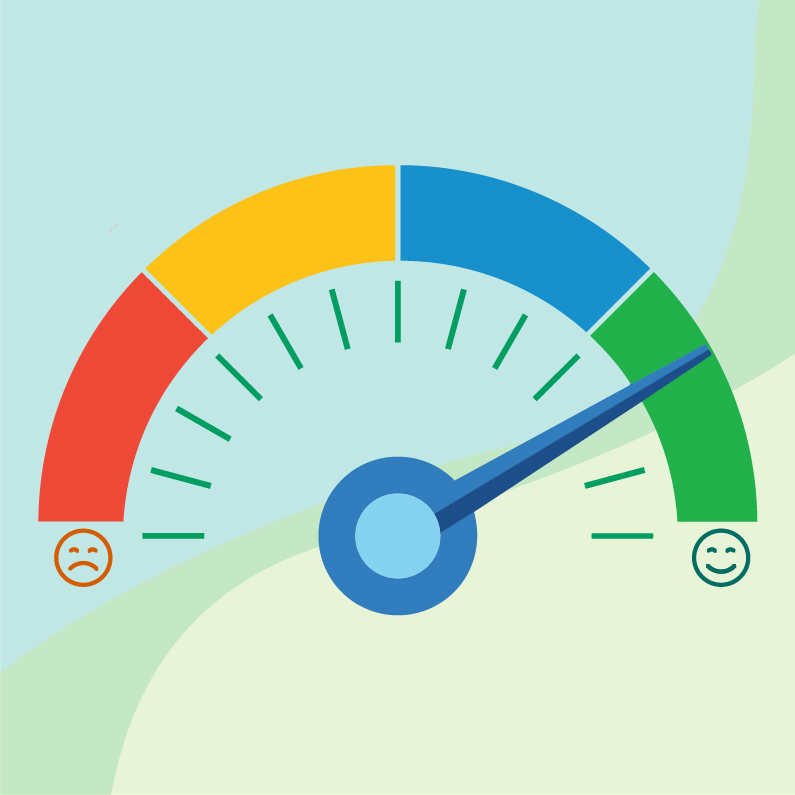
Trust Meter Technical Specification – Version 1
The Inclusive Design Research Centre (IDRC), OCAD University, has published the first version of Trust Meter Technical Specification, a non normative technical specification funded by the Standards Council of Canada’s AI and Data Governance program.
The Trust Meter addresses statistical discrimination in AI supported decision making, particularly harms that arise when individuals or groups are out of distribution relative to the data on which AI systems are trained. These risks are especially relevant for marginalized groups, including people with disabilities, whose circumstances are often poorly captured by aggregate data.
The technical specification provides:
- a discussion of statistical discrimination and outlier risk
- an analysis of potential harms in AI systems used for decision making
- guidance on governance, data, architectural, deployment, and monitoring strategies
- non normative recommendations intended to inform implementers, operators, and reviewers
The specification applies primarily to machine learning based classification systems and decision support tools, including systems that inform human decision making. The specification addresses “statistical discrimination” as defined in CAN-ASC-6.2:2025 Accessible and Equitable AI Systems and outlines the challenge this technical specification addresses, including risks associated with out‑of‑distribution cases and outliers. This specification is intended to support implementation of, and compliance with, the CAN-ASC-6.2:2025 standard.
Trust Meter is a living document that will have periodic reviews. Comments and suggestions for the specification can be submitted through GitHub until the next formal review cycle commences.
How to submit comments
- File an issue in the project GitHub repository (one comment per issue is preferred)
We welcome suggestions, corrections, clarifications, and examples, including:
- examples of harms or near misses involving AI systems
- experience with mitigation strategies discussed in the draft
- analysis of where the draft could be strengthened or clarified